
Ashwagandha is one of Ayurveda’s best-known herbs – and one of the most searched supplements in India. But labels can be confusing: root powder or extract? What does “2.5% withanolides” mean? How much should you take, and when? This guide answers the most common questions so you can choose and use ashwagandha sensibly.
What is ashwagandha?
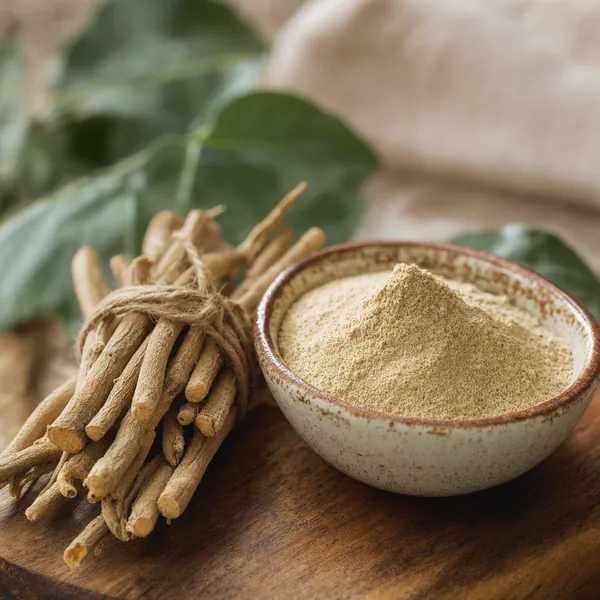
Ashwagandha (Withania somnifera), also called Indian ginseng or winter cherry, is a small shrub whose root has been used in Ayurveda for centuries. It is classed as an adaptogen – a herb traditionally used to help the body cope with everyday physical and mental stress.
Why people take ashwagandha
- Everyday stress balance – its most traditional and best-studied use.
- Energy and stamina – popular with people who have demanding work or training routines.
- Restful sleep – often taken in the evening as part of a wind-down routine.
- Workout recovery – some studies in active adults have looked at strength and recovery.
Ashwagandha is a herbal supplement, not a treatment for anxiety, depression or any medical condition.
Root powder vs extract: what’s the difference?
| Root powder | Standardised extract | |
|---|---|---|
| What it is | Dried, ground whole root | Root concentrated so it contains a set level of active compounds |
| Consistency | Varies with each harvest | Consistent from batch to batch |
| Typical amount | Larger amounts needed | Smaller amounts, measured potency |
Some formulas combine both: the extract for a standardised dose of active compounds, and the root powder for the full spectrum of the traditional herb.
What are withanolides?
Withanolides are the naturally occurring compounds most associated with ashwagandha’s effects. A label that says “standardised to 2.5% withanolides” means every gram of extract contains a known amount of these compounds. This is one of the best ways to compare ashwagandha products – a large milligram number of an unstandardised powder can contain fewer active compounds than a smaller amount of a standardised extract.
How much ashwagandha should you take?
Most studies on ashwagandha root extract have used roughly 300mg to 600mg of extract per day, taken for at least 8 weeks. Root powder is usually taken in larger amounts. Always follow your product’s label rather than combining several ashwagandha products.
Morning or night?
Either works. Many people take it in the morning with breakfast for daytime balance; others prefer the evening. If you split the dose, take it with meals. The most important factor is taking it consistently.
Our pick: Rushi Herbs StaminaX – per 3-capsule serving: 1050mg ashwagandha root extract standardised to 2.5% withanolides, plus 1050mg whole ashwagandha root powder and black pepper extract, in vegan capsules.
Who should avoid ashwagandha?
- Pregnant or breastfeeding women.
- People with thyroid conditions or on thyroid medication – ashwagandha may affect thyroid hormone levels.
- People taking sedatives, blood-pressure, blood-sugar or immune-suppressing medication.
- Anyone with an autoimmune condition or liver concerns, or scheduled for surgery.
If any of these apply, speak to your doctor before starting.
Frequently asked questions
How long does ashwagandha take to work?
Herbal supplements work gradually. Most studies have run for 8 weeks or more.
Can women take ashwagandha?
Yes, adult women can take ashwagandha, except during pregnancy or breastfeeding.
Why is black pepper added?
Black pepper extract is commonly added to herbal formulas to support absorption.
This article is for general information and is not medical advice. Food supplements are not intended to diagnose, treat, cure or prevent any disease.
About Rushi Herbs
Rushi Herbs is an Indian herbal and nutrition brand based in Gujarat. Our products are made in GMP-compliant facilities and sold under FSSAI licence no. 20726031000958, with every ingredient and dose printed on the pack. Our guides are written by the Rushi Herbs team to explain ingredients in plain language - they are not a substitute for advice from your doctor.
More wellness guides
- Turmeric vs Curcumin: Why 95% Curcuminoids & Black Pepper Matter
- Psyllium Husk (Isabgol): Capsules vs Powder & How to Take It
- Moringa (Drumstick Leaf) Benefits, Nutrients & How to Take It
- How to Choose the Best Marine Collagen Powder in India
- Black Garlic vs White Garlic: Differences, Uses & How to Choose