
India is one of the sunniest countries in the world – yet low vitamin D is remarkably common here. More and more people now take vitamin D3, often combined with vitamin K2. This guide explains what each vitamin does, why they are paired, how much you need, the best time to take them and who should be careful.
What does vitamin D do?
Vitamin D is a fat-soluble vitamin your skin makes when it is exposed to UVB sunlight. It:
- contributes to the normal absorption and use of calcium and phosphorus;
- contributes to the maintenance of normal bones and teeth;
- contributes to the maintenance of normal muscle function;
- contributes to the normal function of the immune system.
Why is low vitamin D so common in India?
- Indoor lives – offices, schools and commuting mean little midday sun on bare skin.
- Clothing and sunscreen – both block the UVB your skin needs to make vitamin D.
- Skin tone – darker skin needs longer sun exposure to make the same amount.
- Air pollution – haze reduces the UVB that reaches the ground in many cities.
- Diet – few foods contain vitamin D, and the best sources (oily fish, egg yolks) are not part of a vegetarian diet.
Low vitamin D often causes no obvious symptoms. Some people notice tiredness, bone or muscle aches or weakness, but these have many causes. The only way to know your level is a 25-hydroxy vitamin D blood test.
Vitamin D2 vs D3
Vitamin D3 (cholecalciferol) is the form your skin makes and the form found in animal foods. Vitamin D2 (ergocalciferol) comes from plants and fungi. Studies show D3 raises and maintains blood vitamin D levels more effectively than D2, which is why most supplements use D3.
What is vitamin K2 (MK-7), and why add it?
Vitamin K comes in two main forms: K1 (from leafy greens) and K2 (menaquinones, from fermented foods and some animal foods). Vitamin K contributes to normal blood clotting and to the maintenance of normal bones. It activates proteins involved in how the body uses calcium.
- MK-7 (menaquinone-7) is a form of K2 that stays active in the body much longer than K1 or MK-4, so a once-a-day dose is enough.
- It is found naturally in natto, a fermented soybean food from Japan, and in smaller amounts in some cheeses.
Because vitamin D increases calcium absorption and vitamin K is involved in how calcium is used in bone, the two are often taken together.
How much vitamin D do you need?
| Amount | |
|---|---|
| Recommended daily intake for adults (ICMR-NIN 2020) | 600 IU (15mcg) |
| Upper daily limit for adults (US and EU) | 4000 IU (100mcg) |
| Higher doses (for example 5000 IU daily, or 60,000 IU weekly) | Used to correct low levels – under medical supervision |
Vitamin D is fat-soluble and is stored in the body, so more is not always better. Very high intakes over time can raise calcium levels too far. If you take a higher-strength product, have your vitamin D level checked first and re-tested after a few months, as your doctor advises.
Daily D3 vs weekly 60,000 IU sachets
In India, doctors often prescribe a 60,000 IU sachet or capsule once a week for a set number of weeks to correct low vitamin D. A daily capsule is another way to keep levels steady. Use one approach, not both – do not combine a daily high-strength D3 with weekly sachets unless your doctor tells you to.
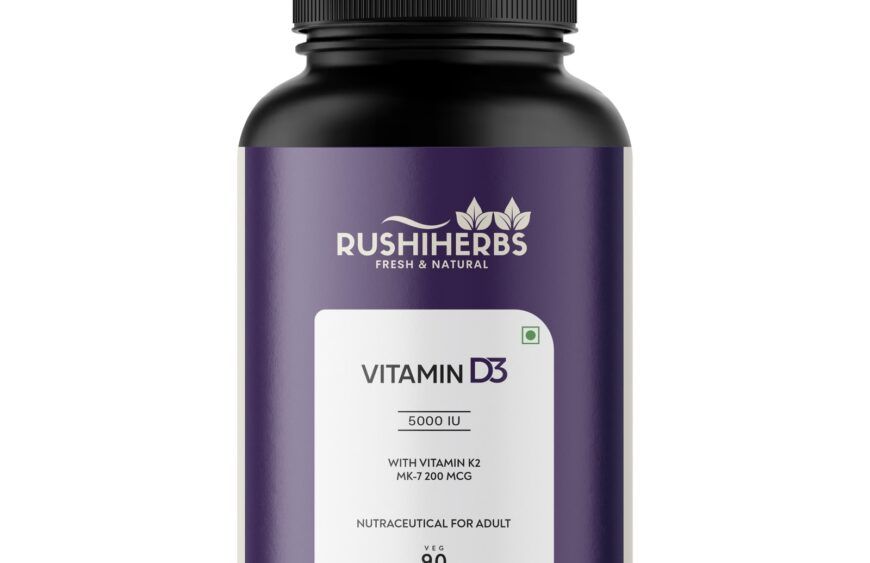
Our pick: Rushi Herbs Vitamin D3 + K2 – 5000 IU vitamin D3 with 200mcg vitamin K2 (MK-7) per vegetarian capsule. 90 capsules (90 days). A higher-strength product, to be taken under medical advice.
Best time to take vitamin D3 and K2
- With your main meal. Both vitamins are fat-soluble and absorb better with food that contains some fat – for example lunch with dal, ghee, curd, nuts or eggs.
- Morning or midday suits most people. Timing matters less than taking it consistently.
- Every day, at about the same time, so you do not forget or double up.
Food sources of vitamin D and K2
| Food | Provides | Vegetarian? |
|---|---|---|
| Oily fish (salmon, mackerel, sardines) | Vitamin D | No |
| Egg yolks | Some vitamin D | Eggetarian |
| Sun-exposed mushrooms | Vitamin D2 | Yes |
| Fortified milk, oil or cereals | Vitamin D (check the label) | Yes |
| Natto (fermented soybeans) | Vitamin K2 (MK-7) | Yes |
| Some aged cheeses | Small amounts of K2 | Yes |
Who should be careful?
- People taking blood thinners such as warfarin – vitamin K can interfere with them. Do not take K2 without your doctor’s approval.
- Kidney disease, kidney stones, high blood calcium, sarcoidosis or parathyroid problems – vitamin D needs medical supervision.
- Anyone already taking vitamin D – including multivitamins, calcium-plus-D tablets or weekly sachets.
- Pregnant or breastfeeding women, children and older adults – use only the product and dose your doctor recommends.
Frequently asked questions
Can I just get vitamin D from the sun?
Many people can make enough with regular midday sun on bare arms and legs, but indoor routines, clothing, sunscreen, skin tone and pollution mean many do not. Avoid sunburn – a blood test is the best guide.
How long does it take to raise vitamin D levels?
Blood levels usually rise over several weeks to a few months of regular intake. Your doctor may re-test after about three months.
Is K2 the same as K1?
No. K1 comes mainly from leafy greens; K2 comes from fermented and some animal foods. MK-7 is a long-acting form of K2.
Can I take vitamin D3 with calcium?
Often yes, but check with your doctor – especially if you already take a calcium-plus-vitamin-D tablet, so your total vitamin D does not get too high.
This article is for general information and is not medical advice. Food supplements are not intended to diagnose, treat, cure or prevent any disease. Please consult a qualified healthcare professional before starting any supplement.
About Rushi Herbs
Rushi Herbs is an Indian herbal and nutrition brand based in Gujarat. Our products are made in GMP-compliant facilities and sold under FSSAI licence no. 20726031000958, with every ingredient and dose printed on the pack. Our guides are written by the Rushi Herbs team to explain ingredients in plain language - they are not a substitute for advice from your doctor.