
Lion’s Mane is a striking white mushroom that looks like a shaggy pom-pom – or a lion’s mane. It has been eaten and used in traditional practice in East Asia for centuries, and today it is one of the most popular “functional mushrooms” for people interested in focus and everyday mental performance. Here is what Lion’s Mane is, what research has looked at, and how to choose and take it.
What is Lion’s Mane?
Lion’s Mane (Hericium erinaceus) grows on hardwood trees in Asia, Europe and North America. Unlike most mushrooms it has no cap – instead it grows long, cascading white spines. It is edible, with a mild, seafood-like taste, and is also dried and extracted for supplements.
What makes it different?
Lion’s Mane contains two groups of compounds that researchers find interesting:
- Hericenones – found mainly in the fruiting body (the part you see).
- Erinacines – found mainly in the mycelium (the root-like network).
Like other mushrooms, it is also a source of beta-glucans, a type of fibre found in mushroom cell walls. The beta-glucan content is one of the most useful numbers to check on a Lion’s Mane label.
Why people take Lion’s Mane
- Focus and mental clarity – its most popular use. A small number of human studies have looked at memory and cognitive performance; research is promising but still early.
- A calm, balanced mood during busy days.
- General wellness – as a nutrient-rich food mushroom with beta-glucans.
Lion’s Mane is a food supplement, not a treatment for memory loss, dementia or any neurological condition.
Fruiting body vs mycelium
| Fruiting body | Mycelium on grain | |
|---|---|---|
| What it is | The mushroom itself | Root network, often grown on rice or oats |
| Beta-glucans | Usually higher | Can be diluted by leftover grain starch |
| What to check | Extract ratio and beta-glucan % | Whether grain filler is included |
How much Lion’s Mane to take
Human studies have used a wide range, commonly around 1 to 3 grams a day of mushroom powder, or smaller amounts of a concentrated extract. Because extracts vary so much, follow the serving size on your product’s label rather than comparing raw milligrams. Take it daily for at least 4-8 weeks before judging, and pair it with good sleep, which matters more for focus than any supplement.
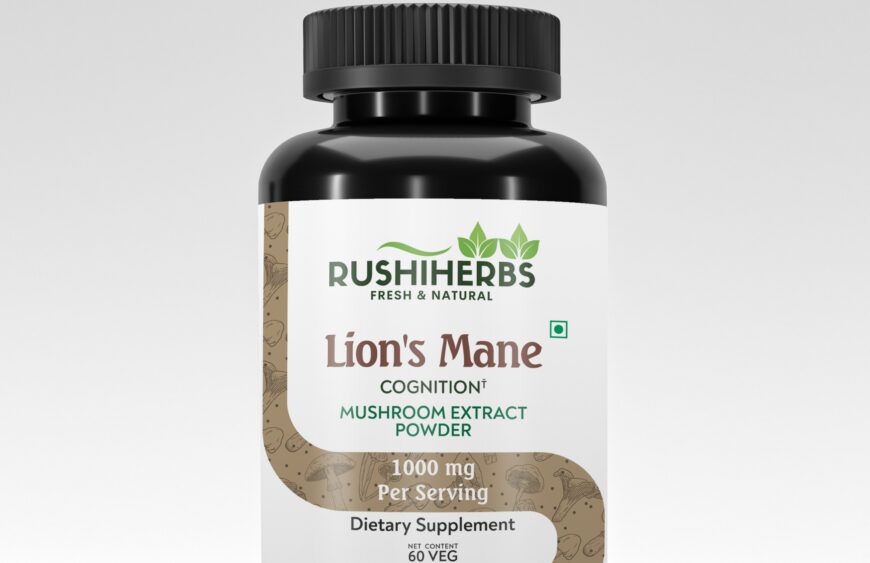
Our pick: Rushi Herbs Lion’s Mane Mushroom Extract – 1000mg Lion’s Mane extract providing 300mg beta-glucans per 2-capsule serving, in vegetarian capsules, made in a GMP-compliant facility.
Who should be careful?
- Anyone with a mushroom allergy.
- Pregnant or breastfeeding women – there is not enough safety research.
- People taking medication for blood sugar or blood thinners, or anyone scheduled for surgery – check with your doctor first.
Side effects are uncommon; occasionally people notice mild stomach discomfort.
Frequently asked questions
Is Lion’s Mane a “magic mushroom”?
No. Lion’s Mane is an edible culinary mushroom and contains no psychoactive compounds.
Morning or night?
Most people take it in the morning with breakfast, as part of a daytime focus routine. It does not contain caffeine.
Can I take it with coffee?
Yes – many people do. Lion’s Mane is often added to “mushroom coffee” blends.
This article is for general information and is not medical advice. Food supplements are not intended to diagnose, treat, cure or prevent any disease. Please consult a qualified healthcare professional before starting any supplement.
About Rushi Herbs
Rushi Herbs is an Indian herbal and nutrition brand based in Gujarat. Our products are made in GMP-compliant facilities and sold under FSSAI licence no. 20726031000958, with every ingredient and dose printed on the pack. Our guides are written by the Rushi Herbs team to explain ingredients in plain language - they are not a substitute for advice from your doctor.