
Berberine has become one of the most talked-about supplements of the last few years. It is a natural compound with a long history in traditional medicine, and it has also been studied a great deal in modern research on metabolic health. This guide explains what berberine is, what the research has looked at, how much people take, the side effects to know about, and why it is often paired with Ceylon cinnamon.
What is berberine?
Berberine is a bright yellow, bitter-tasting compound found in the roots, stems and bark of several plants. The best known are Berberis aristata (Indian barberry, known in Ayurveda as daruharidra), Berberis vulgaris (European barberry), goldenseal and Oregon grape. In supplements it is usually sold as berberine HCl (berberine hydrochloride), a stable and well-studied form.
What has berberine been studied for?
Most of the research on berberine looks at metabolic health – how the body handles glucose and fats. Researchers have looked at its effect on an enzyme called AMPK, sometimes described as the body’s “metabolic master switch”, which helps cells manage energy. People mainly take berberine to:
- Support healthy glucose metabolism as part of a balanced diet and regular activity.
- Support a healthy metabolism alongside weight-management goals.
- Support gut comfort – berberine has traditionally been used for digestion.
Berberine is a dietary supplement. It is not a treatment for diabetes or any other condition, and it must never replace medicine prescribed by your doctor.
How much berberine do people take?
Studies in adults have commonly used 900mg to 1,500mg of berberine a day, split into two or three doses taken with meals. Berberine is cleared from the body fairly quickly, which is why splitting the dose through the day is common. Always follow the serving size on your product’s label.
| Question | Typical answer |
|---|---|
| Daily amount in studies | 900-1,500mg, split into 2-3 doses |
| When to take it | With or just before meals |
| How long before judging | Most studies ran for 8-12 weeks |
| Best form | Berberine HCl, with the mg clearly stated |
Why pair berberine with Ceylon cinnamon?
Cinnamon is another traditional spice often used in metabolic wellness formulas. There are two main kinds:
- Cassia cinnamon – the common, cheaper kind. It contains relatively high levels of coumarin, a natural compound that can affect the liver in large daily amounts.
- Ceylon cinnamon (“true” cinnamon, Cinnamomum verum) – contains only trace amounts of coumarin, which makes it the better choice for daily use.
Side effects and who should be careful
Berberine is generally well tolerated, but the most common side effects are digestive: an upset stomach, constipation, diarrhoea or gas. Starting with one dose a day and taking it with food usually helps.
Talk to your doctor before taking berberine if you:
- Take medication for blood sugar or diabetes – berberine may add to its effect, so your doctor may need to monitor you.
- Take any regular medication – berberine can affect how the liver processes some medicines (including cyclosporine and certain blood thinners).
- Are pregnant or breastfeeding – berberine is not considered safe during pregnancy or breastfeeding.
- Have liver disease or are scheduled for surgery.
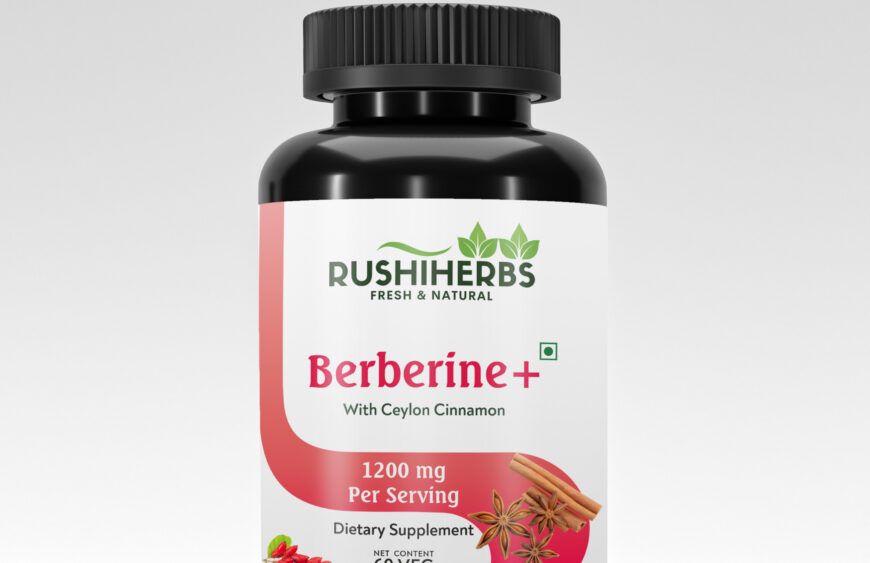
Our pick: Rushi Herbs Berberine+ with Ceylon Cinnamon – 1200mg berberine HCl plus 100mg Ceylon cinnamon per 2-capsule serving, in vegetarian capsules, GMO-free and gluten-free, made in a GMP-compliant facility.
How to choose a good berberine supplement
- Look for “berberine HCl” and a clear mg amount per capsule and per serving.
- Check the cinnamon type if cinnamon is included – Ceylon is preferable for daily use.
- Vegetarian capsules and no unnecessary fillers.
- GMP-certified manufacturing and a full ingredient list.
- Avoid exaggerated promises – no supplement replaces diet, exercise or medical care.
Frequently asked questions
Can I take berberine every day?
Most studies used berberine daily for up to a few months. Follow the label, and check with your doctor if you plan to take it long term or take any medication.
Is berberine the same as turmeric?
No. Both are yellow, but berberine comes from barberry and related plants, while curcumin comes from turmeric. They are different compounds.
Should I take berberine on an empty stomach?
Taking it with a meal is usually more comfortable for the stomach and fits how it was used in most studies.
This article is for general information and is not medical advice. Food supplements are not intended to diagnose, treat, cure or prevent any disease. Please consult a qualified healthcare professional before starting any supplement.
About Rushi Herbs
Rushi Herbs is an Indian herbal and nutrition brand based in Gujarat. Our products are made in GMP-compliant facilities and sold under FSSAI licence no. 20726031000958, with every ingredient and dose printed on the pack. Our guides are written by the Rushi Herbs team to explain ingredients in plain language - they are not a substitute for advice from your doctor.